CERVEJARIA VÁVÁ
2025 - Lisboa, Portugal
-
Owner: Ensaio Gastrobar Lda.
Location: Alvalade, Lisboa
Project: 2025
Construction: 2025
Area: 123 m2
Photography: Ivo Tavares
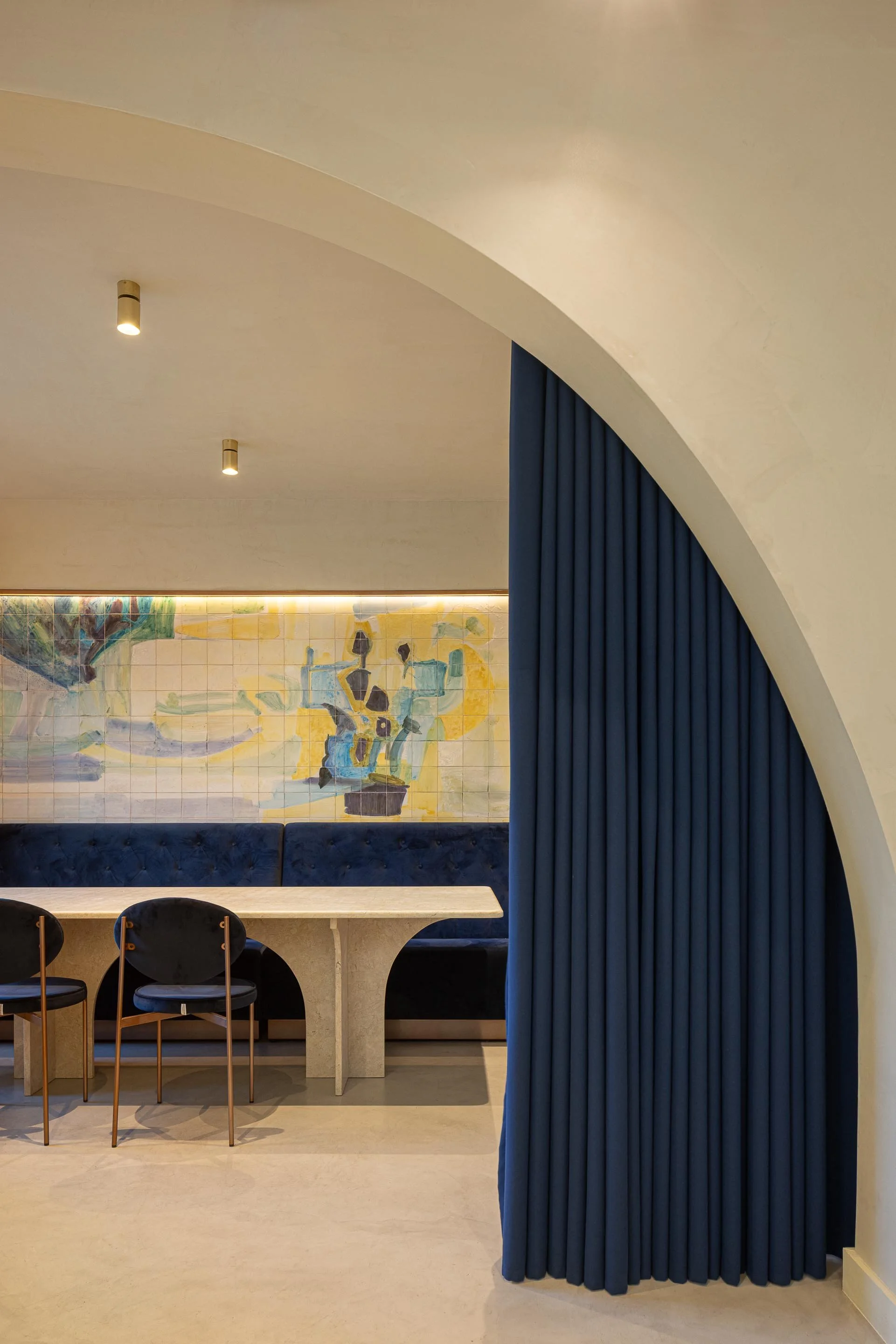
The Vává Brewery project is the result of an intervention developed with great respect for the pre-existing space — a place with a strong historical character that, over time, had been progressively altered through the addition of successive decorative ceiling layers and design elements that compromised the original spatial clarity.
Café Vává was established in 1958 on the ground floor of one of the emblematic residential blocks located at the intersection of Avenida de Roma and Avenida dos Estados Unidos da América, in Lisbon. These buildings were designed in 1952 by architects José Segurado and Filipe Nobre Figueiredo, and their construction was completed in the same year as the café’s inauguration. Guided by the urban planning principles set out in the Athens Charter, this urban ensemble places particular importance on the integration of the decorative arts, especially ceramics, through patterned tile claddings and panels specifically designed for individual spaces.
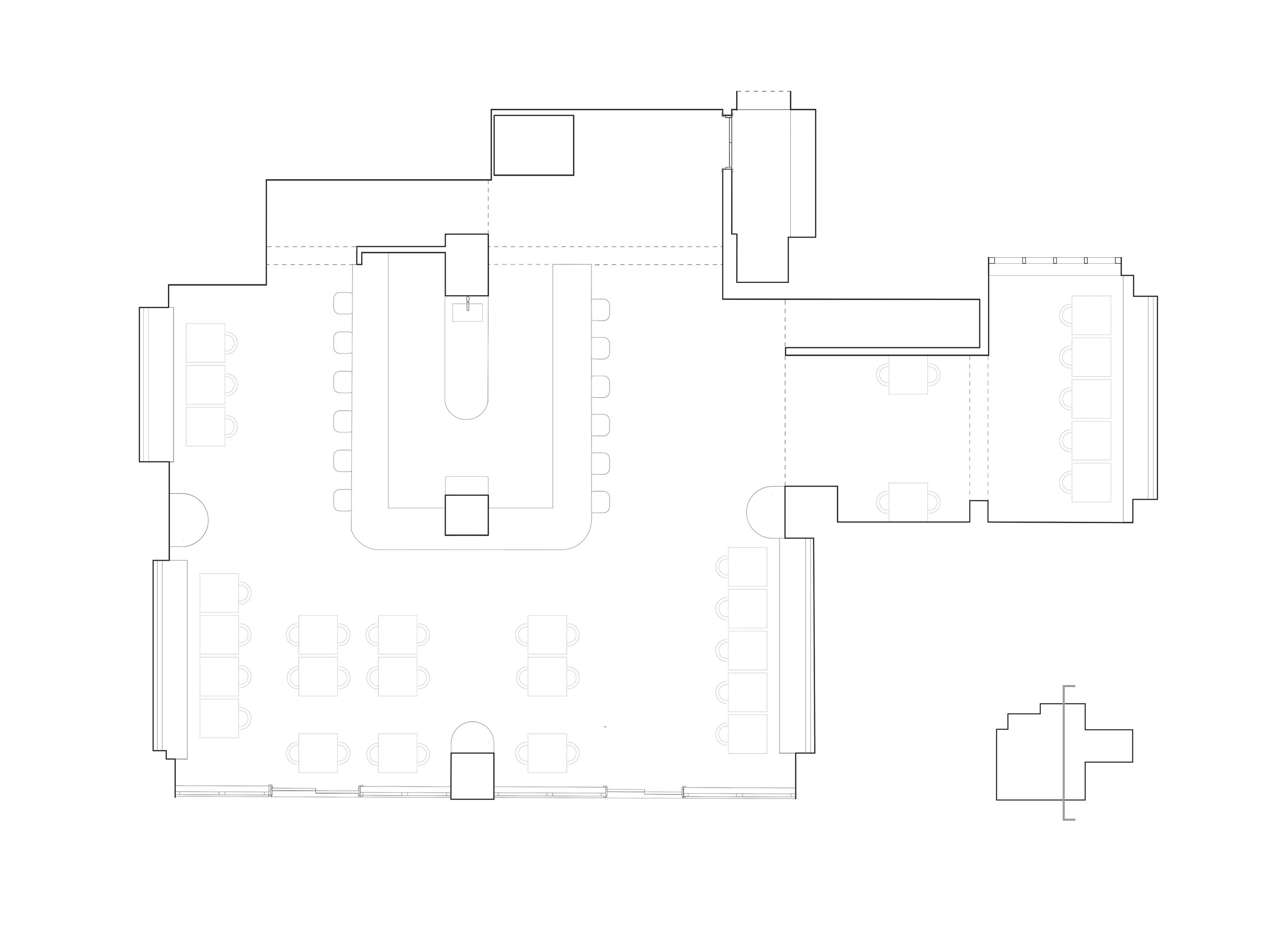
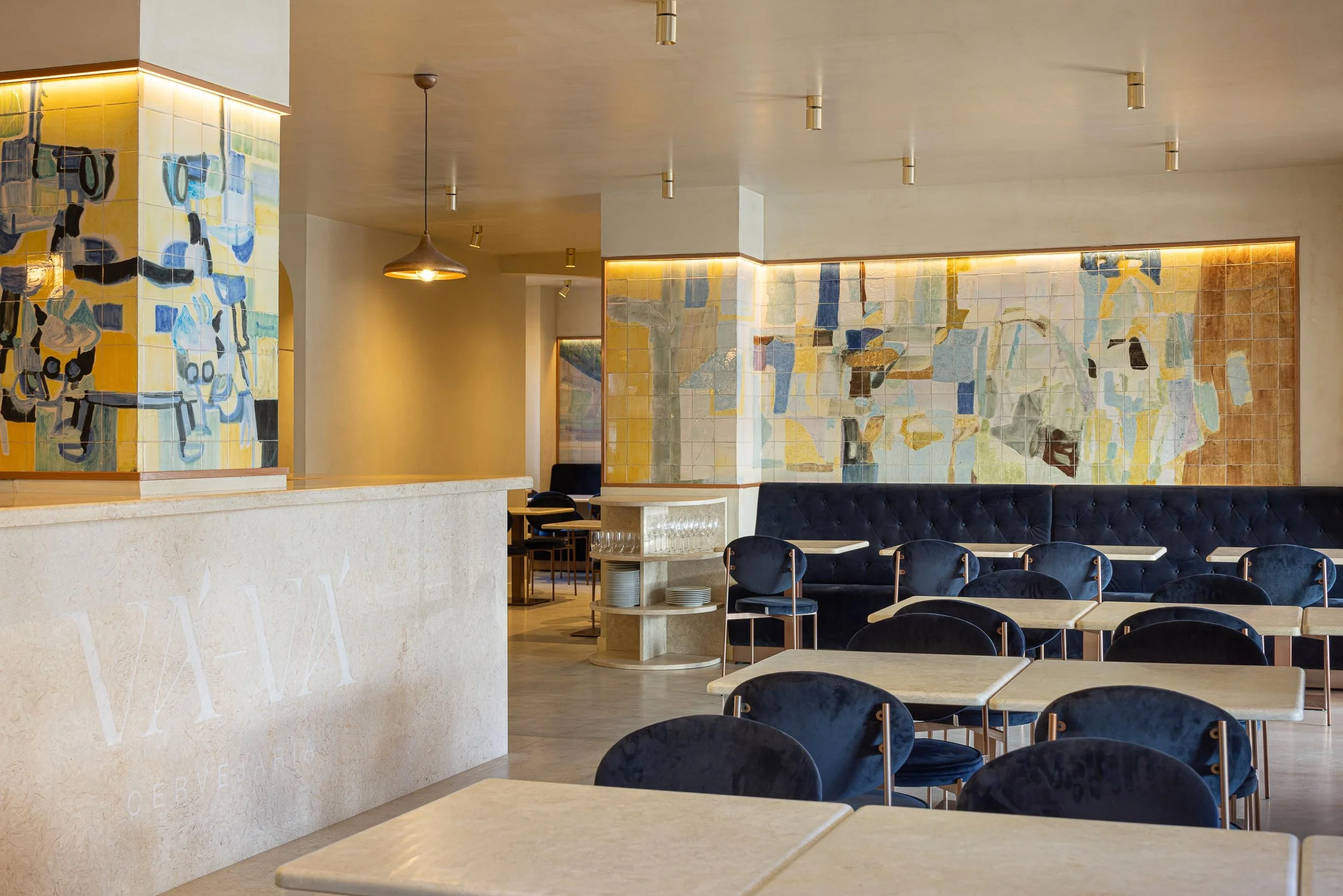
With interior design by architect and decorator Eduardo Anahory, Vá-Vá became a legendary meeting place and an important cultural reference, closely associated with the Portuguese Cinema Novo movement. One of its defining elements was a large counter that structured and shaped the space.
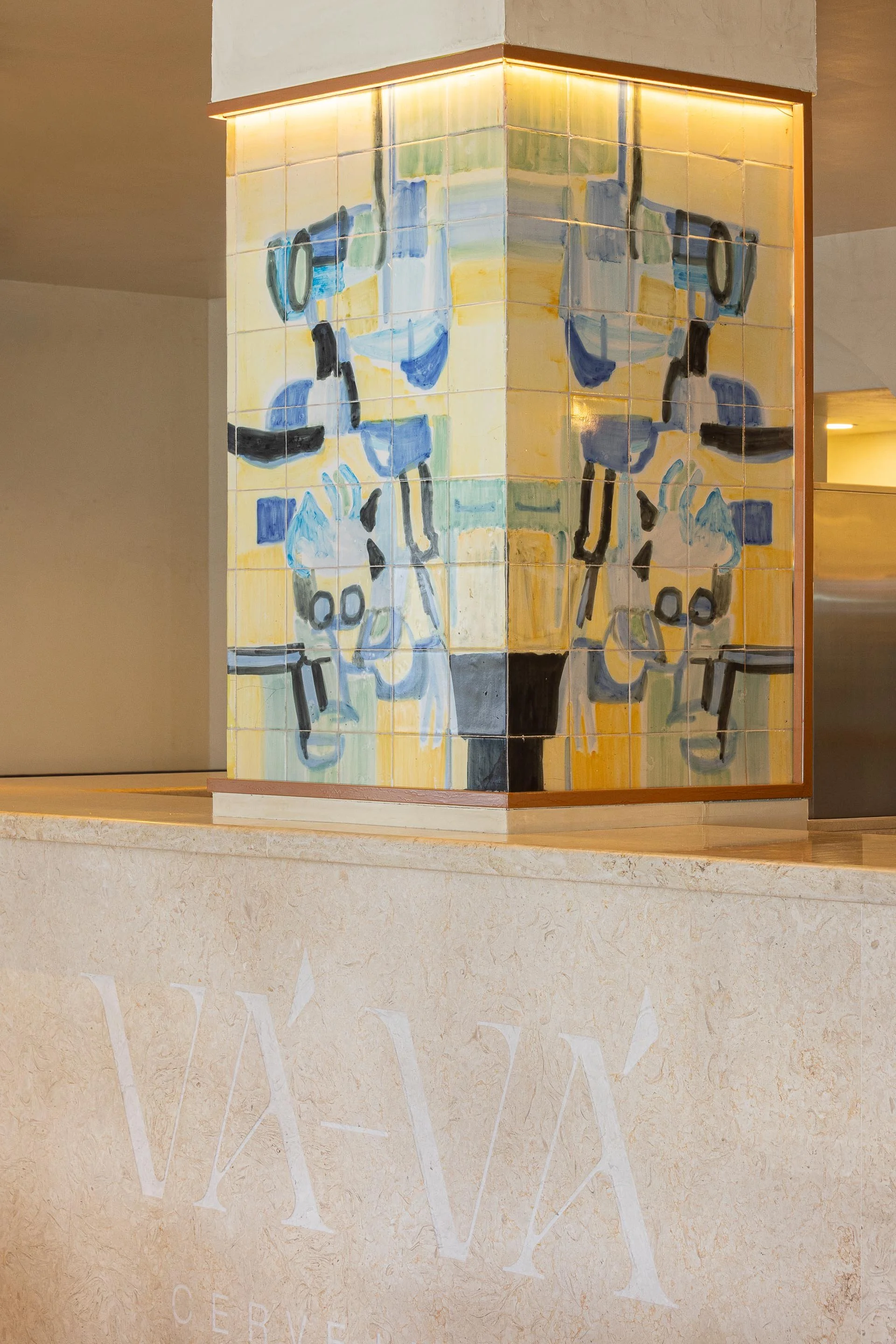
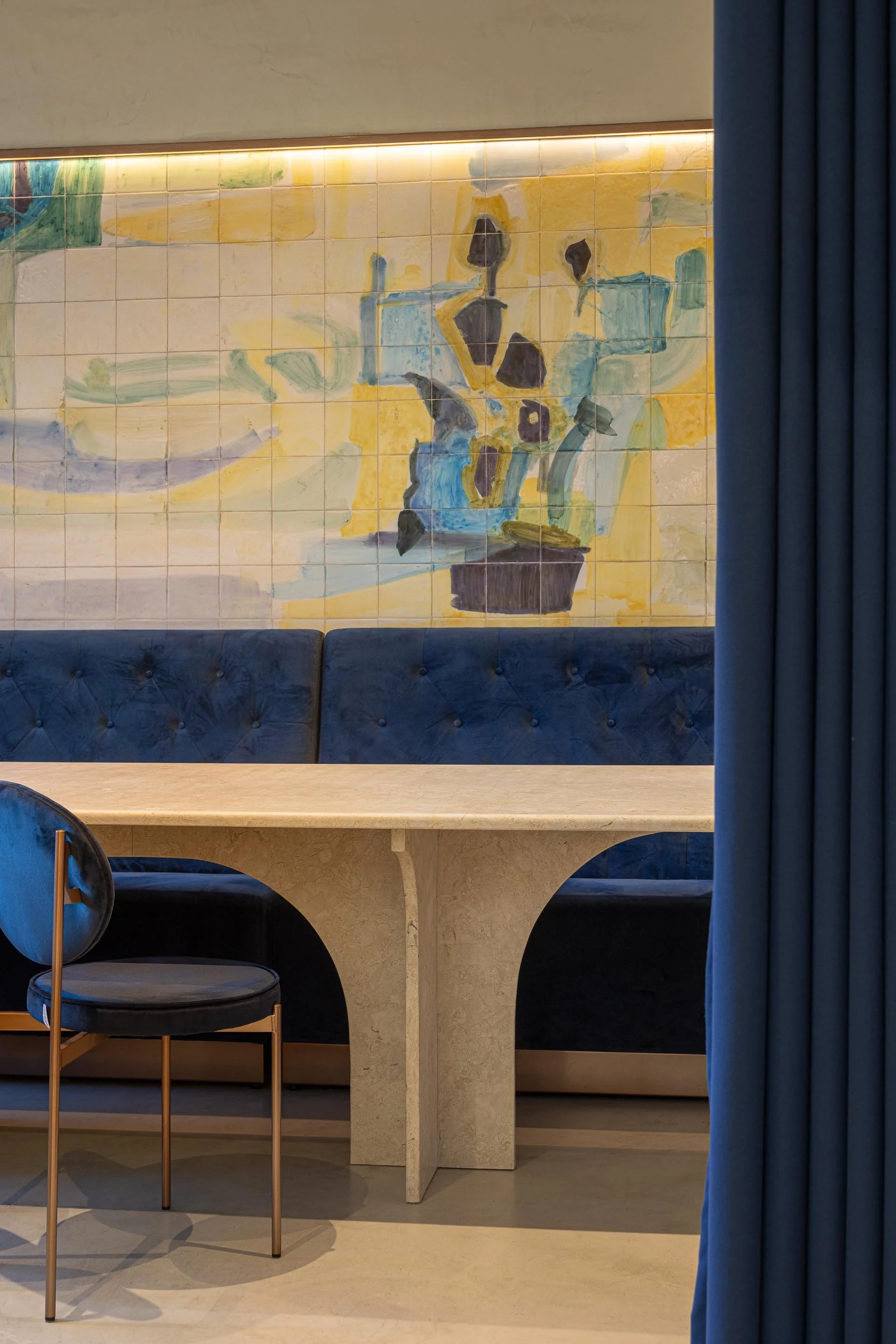
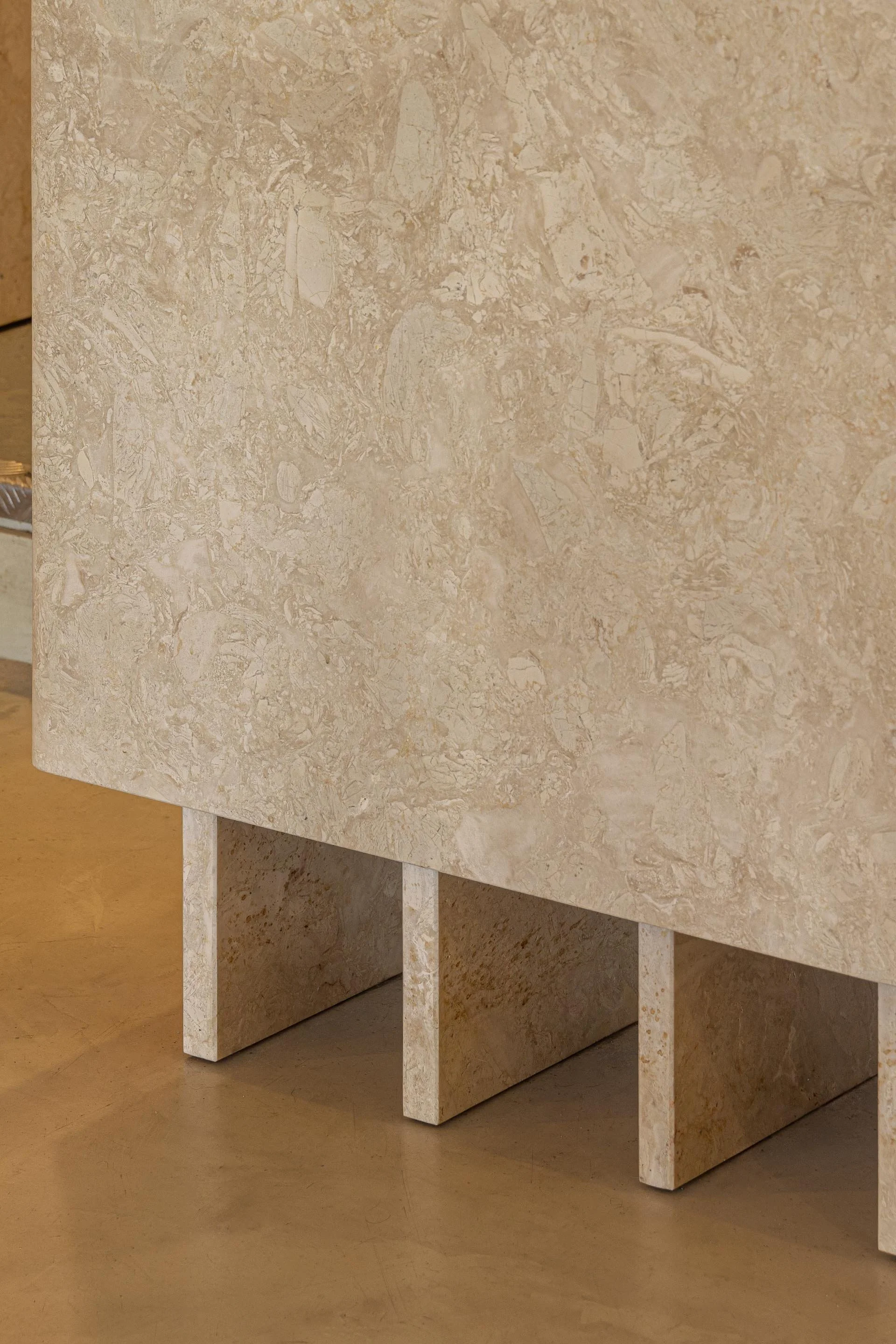
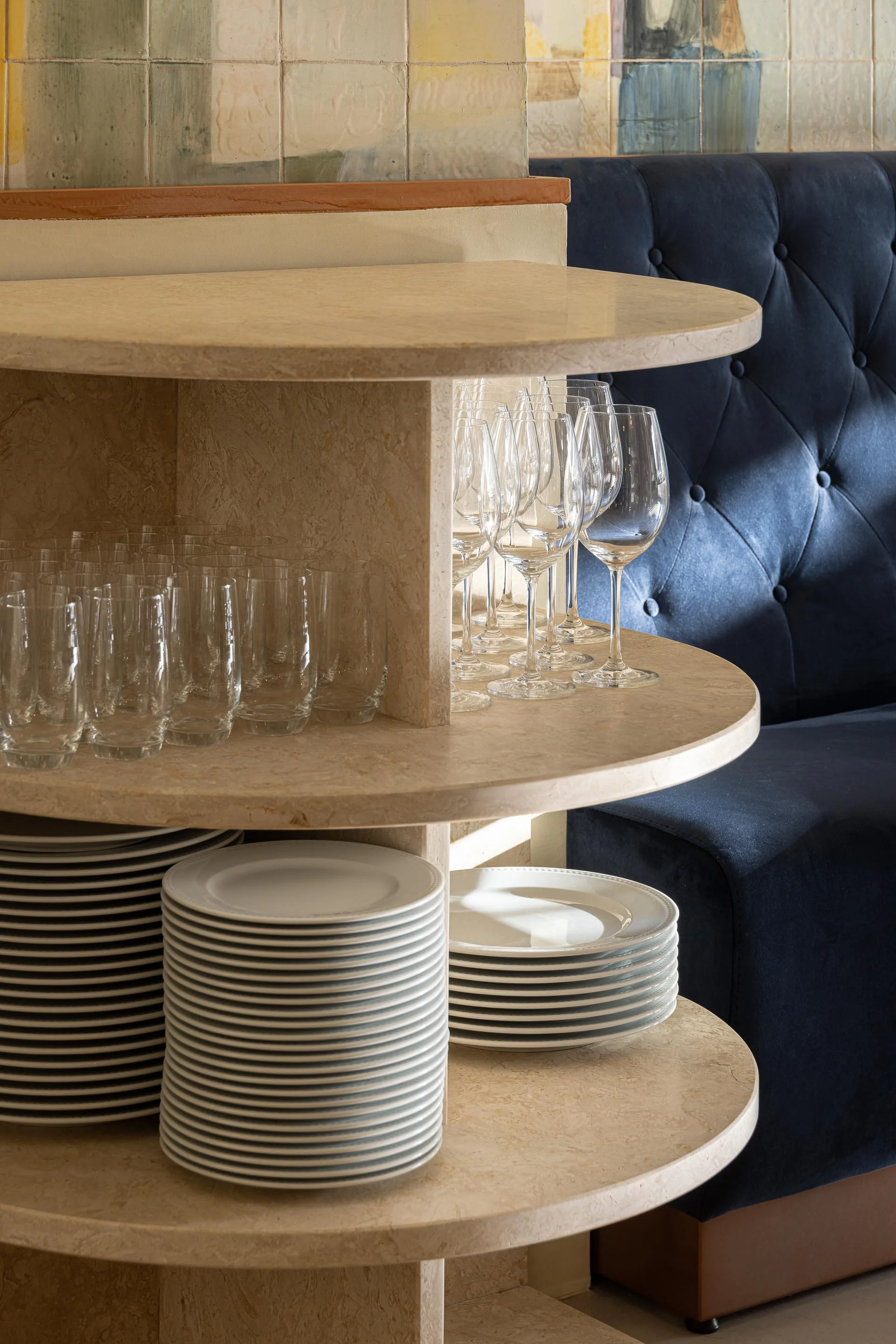
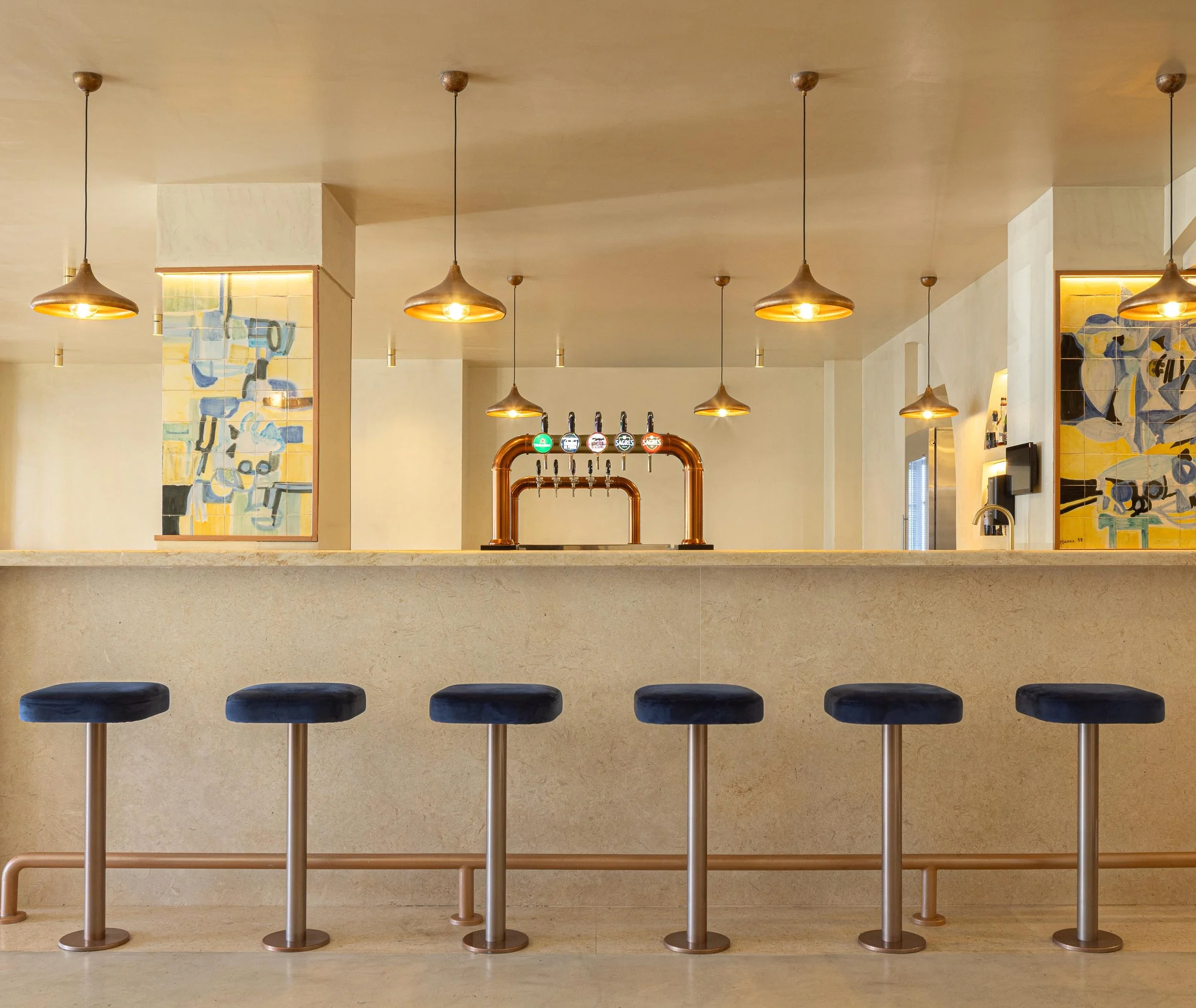
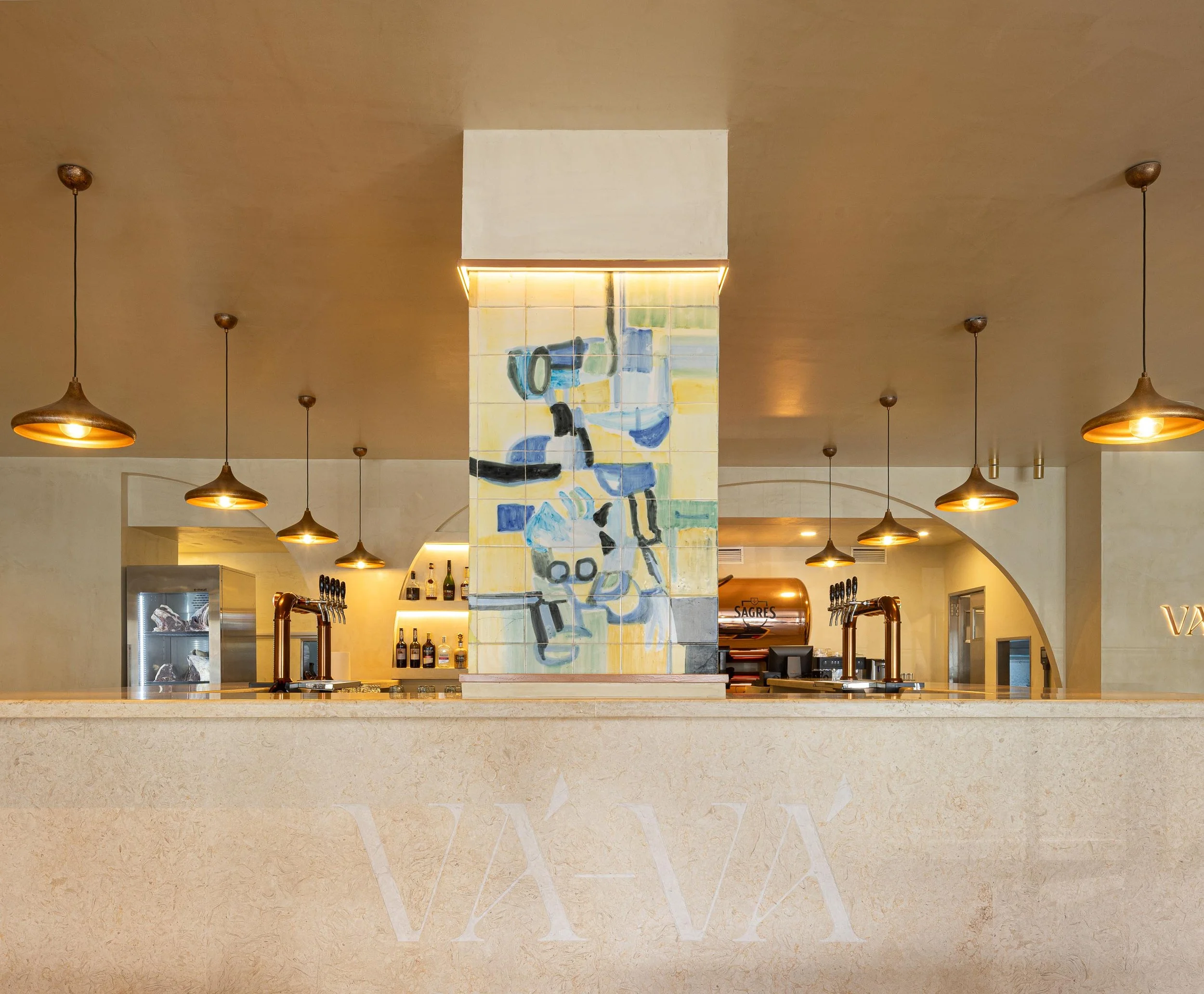
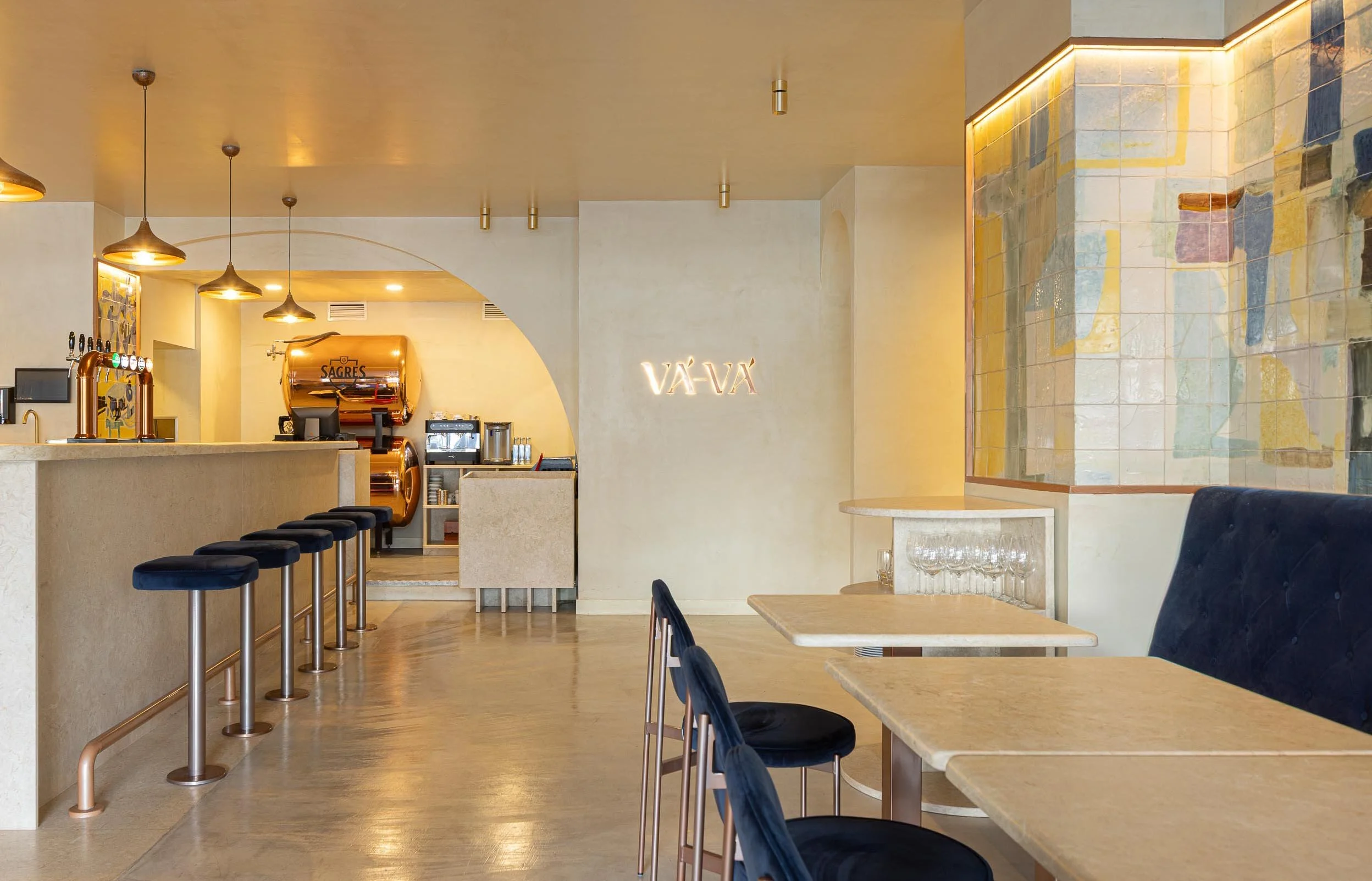
The current intervention seeks to restore this founding idea through the introduction of a new central counter in lioz stone — a material traditionally associated with Lisbon and used on the building’s exterior façades — which organizes, enhances, and dignifies the interior space. Materiality thus plays a fundamental role, establishing a link between the site’s memory, local construction traditions, and a contemporary architectural approach.
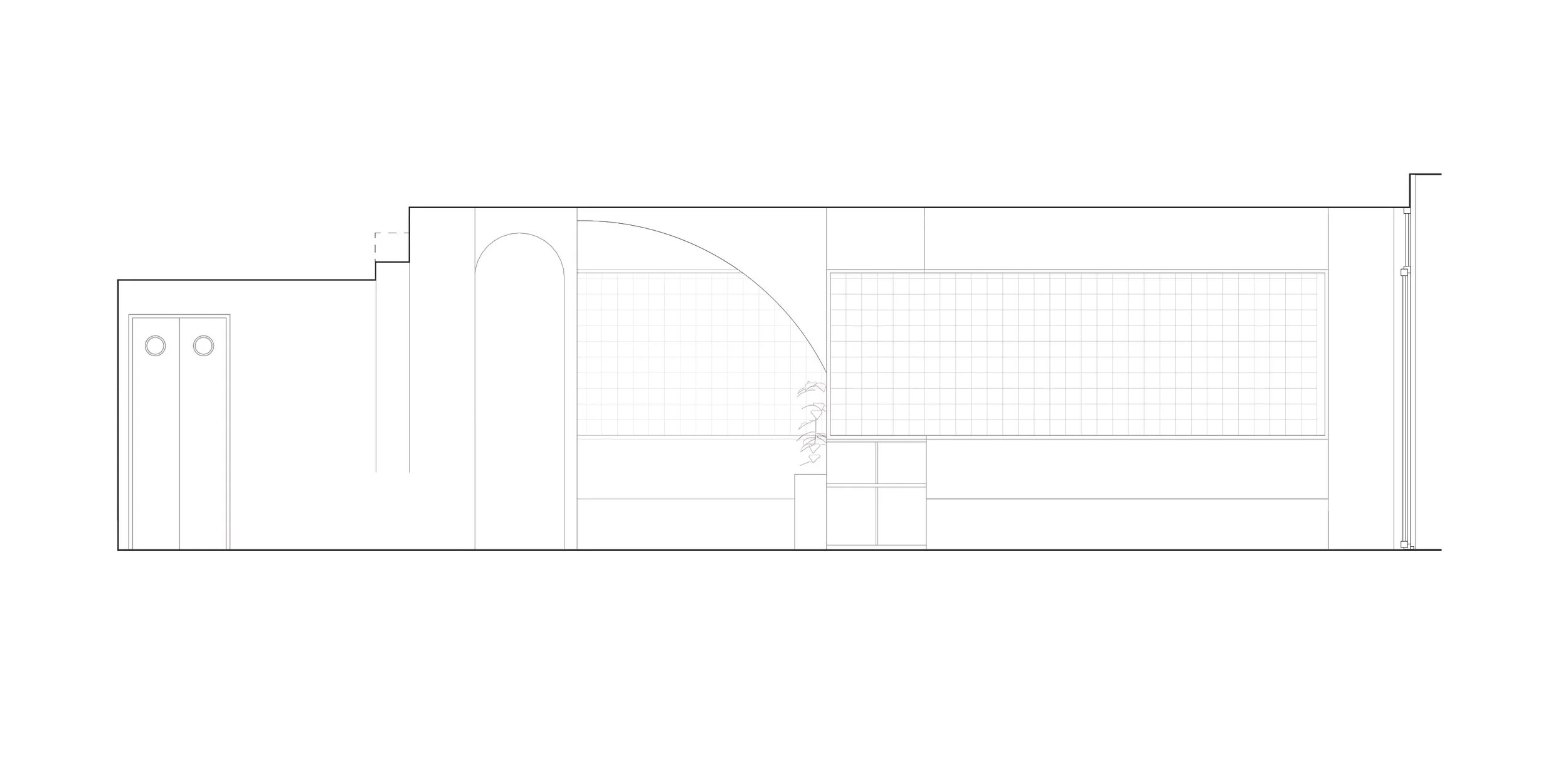
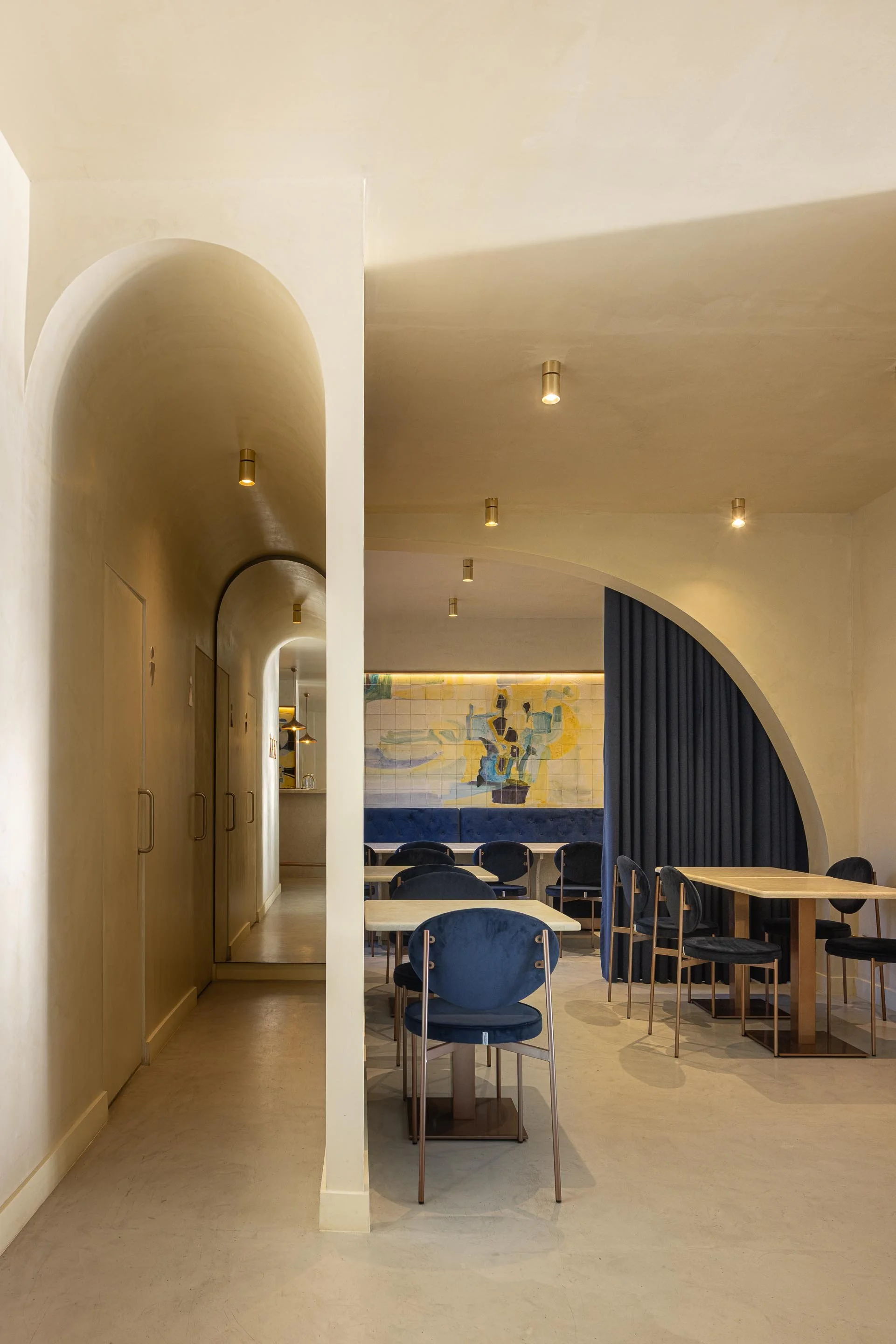
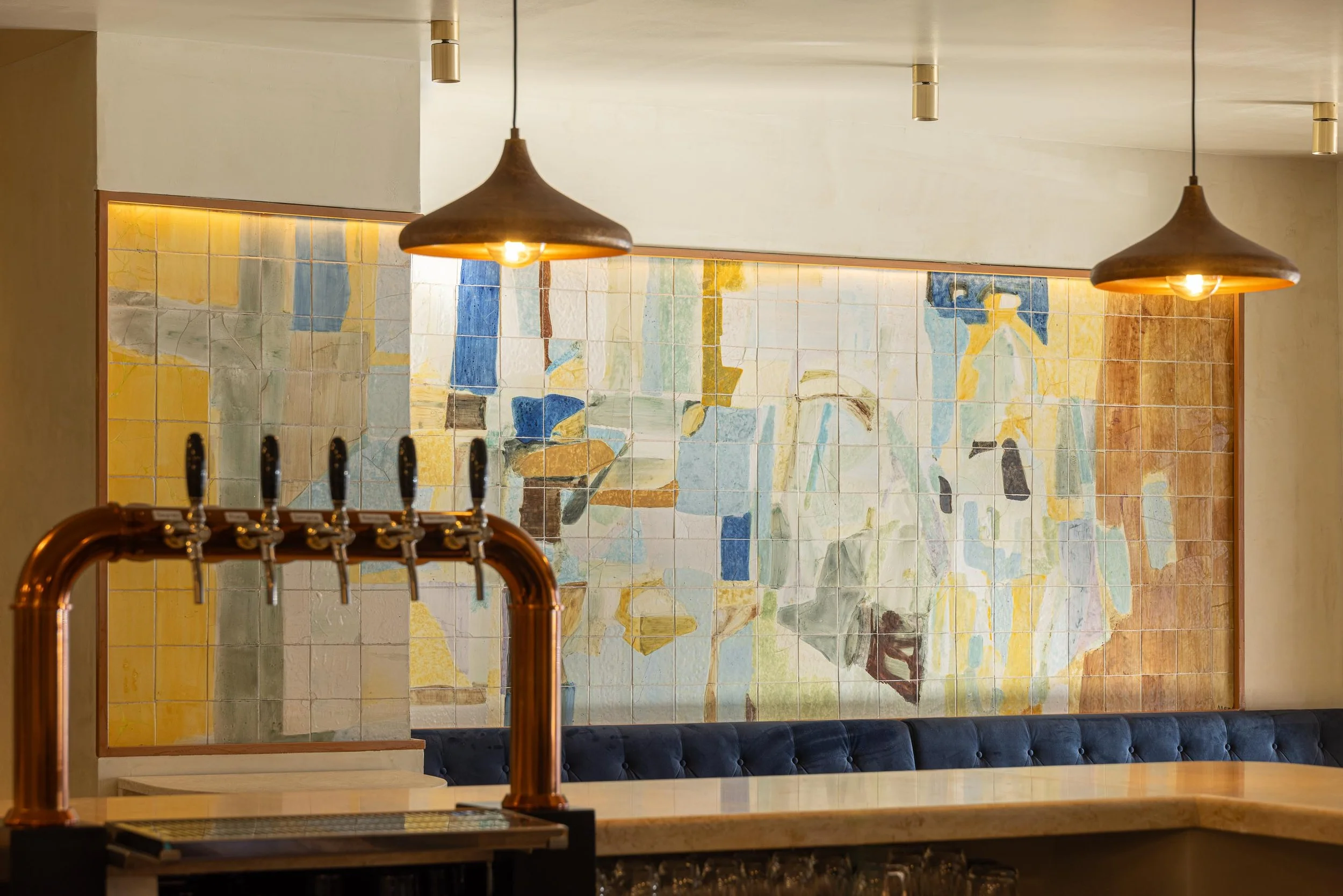
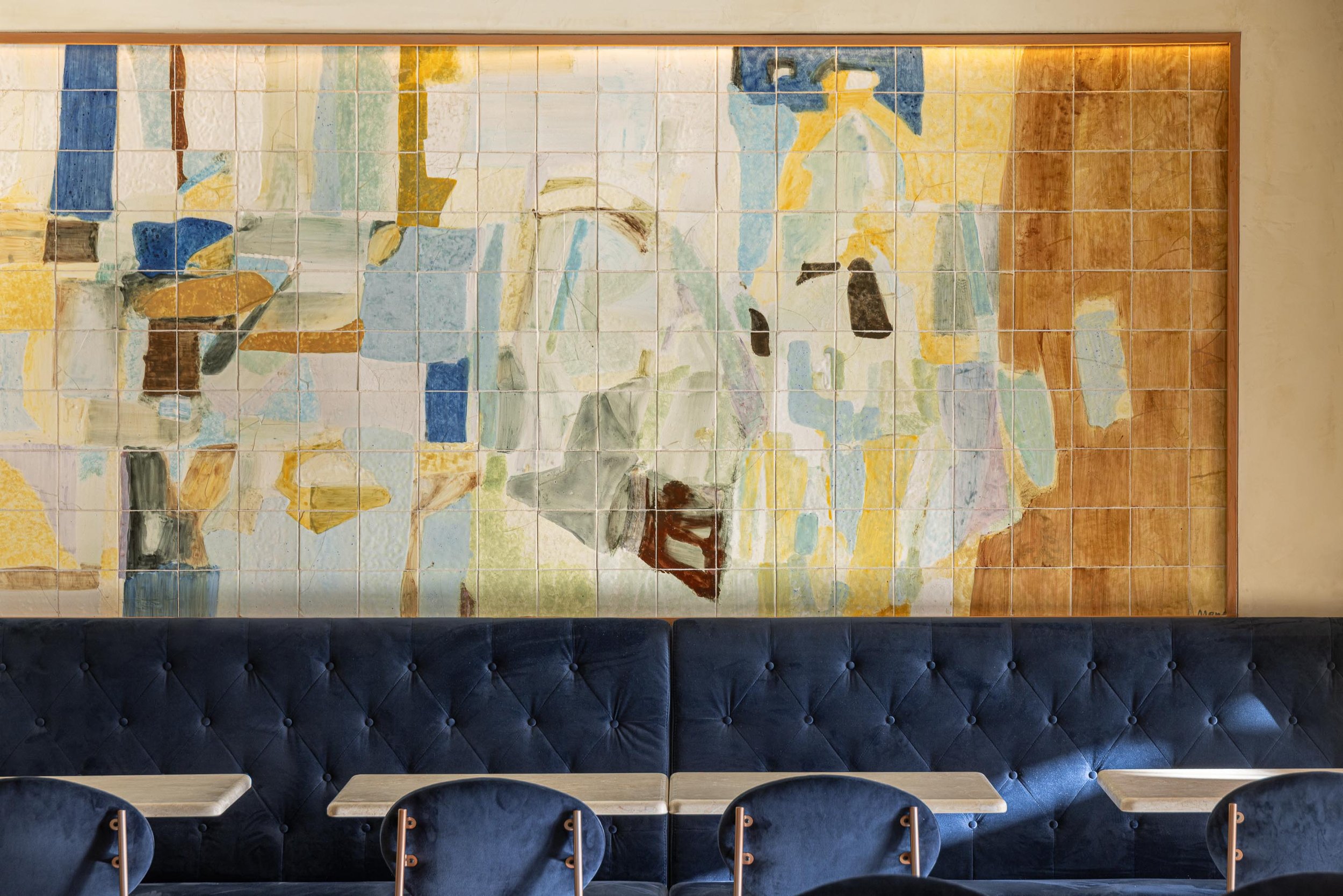
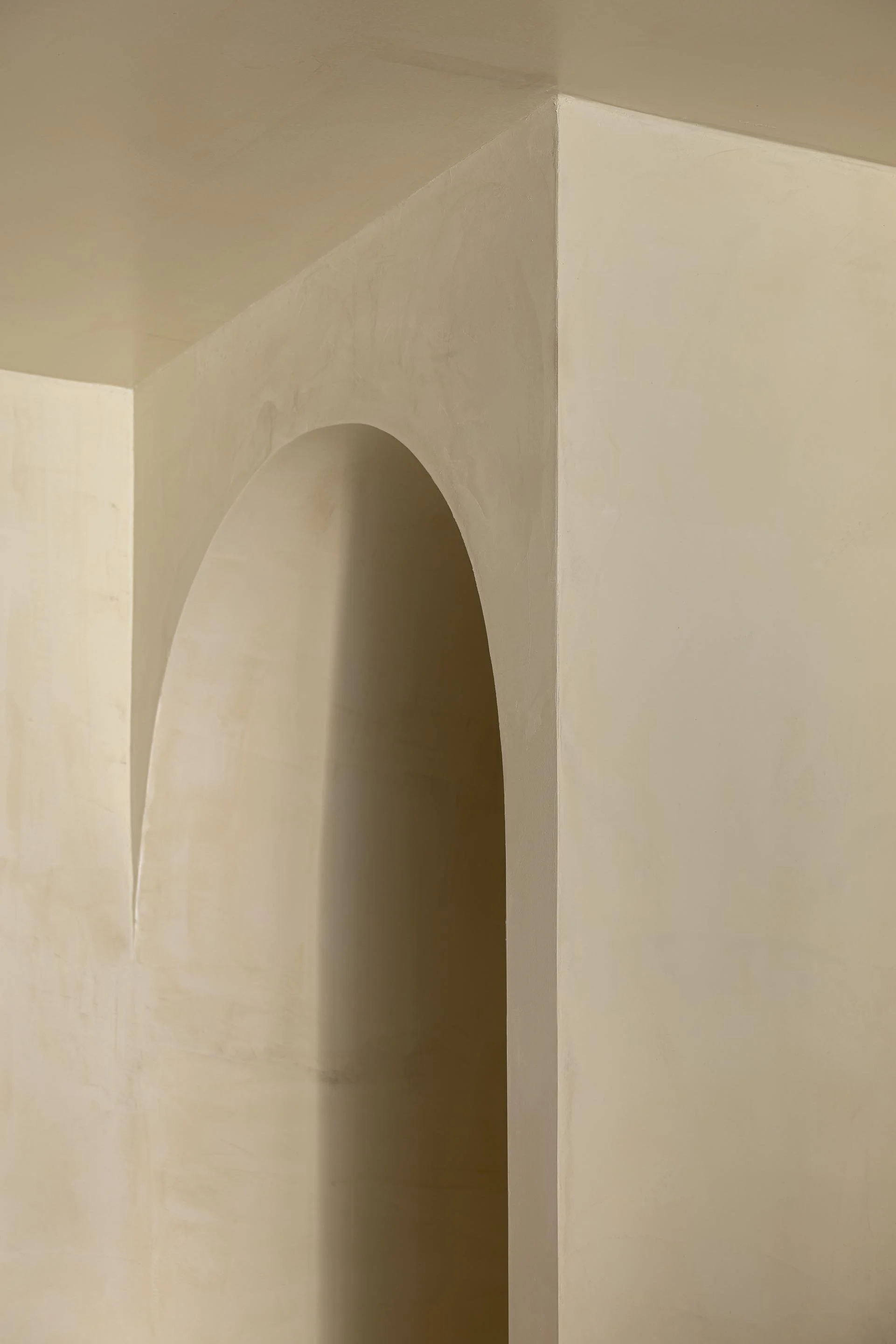
The project strategy is based on the simplification and synthesis of decorative and spatial elements, reducing visual noise and reinforcing spatial clarity. This approach allowed the ceramic panels painted by the artist Menez to be fully revealed and emphasized, as they constitute the primary identity of the space and carry its historical and cultural significance.
Lighting, predominantly indirect, was carefully designed to highlight volumes, materials, and details, contributing to a warm and timeless atmosphere. The result is a balanced and restrained space, where architecture, memory, and everyday use coexist coherently, restoring Vá-Vá’s original character as a place of gathering and social exchange